
Quality Faraday bags block 5G millimeter wave frequencies when properly constructed, but this is one of the hardest signals to block reliably. Millimeter wave 5G operates at 24-40 GHz with wavelengths measured in millimeters (7-12mm). At these extremely high frequencies, even tiny gaps in seams or closures can leak signals. A bag that blocks 4G LTE perfectly might struggle with mmWave 5G if construction quality isn’t excellent.
But here’s the reality: most Faraday bags aren’t tested at mmWave frequencies, and most people don’t need mmWave blocking anyway. Millimeter wave 5G is only deployed in dense urban areas (parts of major cities), has extremely limited range (a few hundred feet), and doesn’t penetrate walls or obstacles well. Your phone probably isn’t using mmWave 5G most of the time even if it supports the technology.
That said, if you’re in a mmWave coverage area and need guaranteed blocking, you need a bag specifically tested and rated for frequencies above 24 GHz. Standard consumer bags designed for blocking cellular, WiFi, and GPS might not reliably block mmWave without exceptional construction quality.
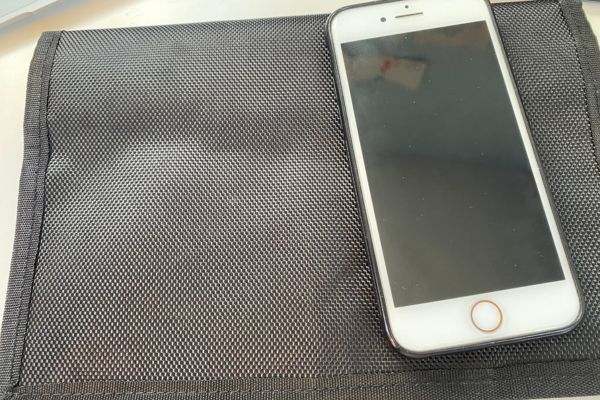
What Is 5G Millimeter Wave?
Understanding mmWave helps you understand why it’s challenging to block.
Frequency Range and Wavelength
5G millimeter wave operates at 24-40 GHz in the US, with some bands extending up to 71 GHz in other countries. These frequencies are much higher than previous cellular technologies:
- 4G LTE: 600 MHz to 2.5 GHz (wavelengths: 50cm to 12cm)
- Sub-6 GHz 5G: 600 MHz to 6 GHz (wavelengths: 50cm to 5cm)
- mmWave 5G: 24-40 GHz (wavelengths: 12mm to 7mm)
The wavelength of 28 GHz mmWave is about 10.7mm. At 39 GHz, it’s 7.7mm. These wavelengths are literally millimeters, which is where the “millimeter wave” name comes from.
Why Wavelength Matters for Blocking
Electromagnetic shielding effectiveness depends heavily on the relationship between wavelength and gap size. The rule of thumb is that openings need to be much smaller than the wavelength you’re blocking, typically less than 1/10th the wavelength.
For 900 MHz cellular (33cm wavelength), gaps up to 3cm can be somewhat acceptable. For 28 GHz mmWave (10.7mm wavelength), gaps need to be under 1mm to reliably block the signal.
A seam with a 2mm gap that blocks all 4G frequencies perfectly will leak mmWave 5G. That 2mm gap is nearly 20% of the mmWave wavelength. This is why some bags fail at high frequencies even though they handle lower frequencies fine.

Speed vs Coverage Trade-off
Millimeter wave 5G provides extremely high speeds (multi-gigabit) but terrible range and penetration. It’s only deployed in small cells in dense urban areas. You need to be within a few hundred feet of a mmWave transmitter with clear line of sight.
Rain, trees, your hand over the phone, or a window between you and the transmitter all degrade or block mmWave signals. This is why phones with mmWave support constantly fall back to sub-6 GHz 5G or 4G LTE.
Most 5G coverage in the US is sub-6 GHz, not mmWave. Unless you’re in a downtown urban core of a major city, your phone probably isn’t using mmWave even if it supports it.
Why mmWave Is Harder to Block
The extremely short wavelength creates unique challenges.
Seam Sensitivity
Every seam, fold, or joint in a Faraday bag is a potential leakage point. With longer wavelengths, seams can have small imperfections without compromising blocking. With mmWave’s 7-12mm wavelengths, even a 1mm gap can leak signals.
Seam construction quality matters more for mmWave than for any other frequency. Overlapping seams need tighter tolerances. Conductive tape needs perfect adhesion with no gaps. Stitching that leaves microscopic openings becomes problematic.

I’ve tested bags that block 4G and WiFi completely but show slight mmWave leakage around seam areas. The bag works fine for normal cellular signals, but mmWave is unforgiving of construction imperfections.
Closure Mechanism Challenges
The opening where you insert and remove devices is always the weakest point. Roll-top closures need more folds to block mmWave reliably. Velcro closures need perfect engagement across the entire surface. Zippers are particularly challenging because the interlocking teeth create microscopic gaps.
A roll-top closure that provides adequate blocking for 2.4 GHz WiFi with 3 folds might need 5-6 folds to reliably block 28 GHz mmWave. The shorter wavelength requires more layers of overlapping material to ensure complete blocking.
Material Surface Effects
At mmWave frequencies, surface roughness and coating uniformity matter more than at lower frequencies. The conductive coating needs to be extremely uniform without thin spots or microscopic gaps.
Mesh size and particle distribution become critical. A fabric coating with 0.5mm average particle spacing might work fine for blocking 900 MHz signals but create weak spots for mmWave.
Testing Difficulty
Most manufacturers don’t test their bags at mmWave frequencies. Professional RF testing equipment for 24-40 GHz is expensive and requires specialized expertise. Many bags are only tested up to 6 GHz, then manufacturers extrapolate performance to higher frequencies.
Some bags might block mmWave well. Others might not. Without actual testing data at mmWave frequencies, you’re making assumptions. Testing standards that stop at 6 GHz don’t validate mmWave blocking.
Which Bags Block mmWave Effectively?
Not all Faraday bags are created equal at these extreme frequencies.
Bags with High-Frequency Testing
Look for manufacturers who specifically test and publish results above 24 GHz. Some professional-grade bags are tested to 40 GHz or higher and publish attenuation data across the entire range.
Bags certified to military standards like MIL-STD-188-125 often include testing across wider frequency ranges including mmWave. These bags cost more, but you’re paying for verified performance rather than hoping it works.
Multi-Layer Construction with Tight Tolerances
Multiple layers of shielding material help compensate for microscopic imperfections. A 3-4 layer bag where one layer has a tiny weakness is covered by the other layers.
The spacing between layers and the uniformity of construction matter more at mmWave frequencies than at lower frequencies. Bags designed specifically for professional or military use typically have tighter manufacturing tolerances.
Superior Closure Systems
Roll-top closures with 5+ folds provide better mmWave blocking than simpler closures. The multiple overlapping layers of material create a longer path that mmWave signals must penetrate, improving blocking effectiveness.
Magnetic closures and Velcro are more challenging at mmWave frequencies. If the closure doesn’t engage perfectly across its entire surface, mmWave can leak through gaps that wouldn’t leak lower frequencies.
Professional vs Consumer Grade
Consumer bags in the $30-80 range are designed primarily for blocking cellular (600 MHz to 6 GHz), WiFi (2.4 and 5 GHz), Bluetooth, GPS, and NFC. Many of these also block mmWave, but it’s not always guaranteed unless specifically tested.
Professional bags at $150-300+ are more likely to have verified mmWave blocking because they’re designed for forensics and military applications that require comprehensive frequency coverage.
Testing Your Bag for mmWave Blocking
Verifying mmWave blocking at home is difficult but not impossible.
The Challenge of DIY Testing
Unlike testing cellular signal blocking (just call your bagged phone), mmWave testing requires knowing whether your phone is actually using mmWave and whether it’s available in your location.
Most locations don’t have mmWave 5G coverage. Even in cities with mmWave, coverage is limited to specific areas. Your phone will show “5G” in the status bar whether it’s using sub-6 GHz or mmWave, making it hard to distinguish.
Field Test Mode
Many phones have field test or engineering modes that show which specific frequency band the phone is using. On iPhones, dial *3001#12345#* to access field test mode (varies by iOS version). Android methods vary by manufacturer.
In field test mode, you can see the specific band. If you see n260, n261, or mmWave-specific bands above 24 GHz, your phone is using mmWave. If you see bands like n71, n41, or lower numbers, you’re on sub-6 GHz 5G.
Basic mmWave Test (If Available)
If you’re in a location with confirmed mmWave coverage and your phone is using mmWave:
- Verify phone shows 5G connection with field test confirming mmWave band
- Run a speed test (mmWave should show 1+ Gbps speeds)
- Seal phone in Faraday bag following proper closure procedure
- Wait 60 seconds
- Check phone status – should show no signal or dropped to 4G/LTE
- Remove phone and verify it reconnects to mmWave
If the phone maintains any signal while bagged, or if it stays on 5G (even dropping to sub-6 GHz), signals are leaking.
Limitations of Home Testing
This test only works if mmWave is actually available in your location and your phone supports it. Most people can’t perform this test because mmWave isn’t available where they are.
You’re also testing in one environment. Even if blocking works in your test location, construction imperfections might leak signals differently in other conditions or orientations.
Professional RF Testing
The only definitive way to verify mmWave blocking is professional RF testing with a spectrum analyzer and signal generator covering 24-40 GHz. This equipment costs tens of thousands of dollars and requires expertise to use correctly.
If mmWave blocking is critical for your application, buy bags with published test reports from accredited labs showing attenuation data across the entire mmWave range.
Do You Actually Need mmWave Blocking?
For most people, the answer is probably no.
Limited mmWave Deployment
As of 2025, mmWave 5G is only deployed in portions of major US cities. We’re talking specific downtown blocks, stadiums, airports, convention centers. Suburban and rural areas have zero mmWave coverage.
T-Mobile, Verizon, and AT&T have deployed mmWave in limited areas, but the vast majority of their 5G coverage is sub-6 GHz. Even in cities with mmWave, you might walk one block and lose mmWave coverage.
If you’re not regularly in dense urban cores of major cities, your phone never uses mmWave. Blocking a signal your phone doesn’t use is pointless.
Sub-6 GHz 5G Is More Common
Most 5G coverage uses frequencies below 6 GHz. These frequencies are blocked by standard Faraday bags designed for cellular coverage. A bag that blocks 4G LTE reliably also blocks sub-6 GHz 5G.
The “5G” in your phone’s status bar is almost always sub-6 GHz, not mmWave. Standard bags handle this fine.
Future-Proofing Consideration
MmWave deployment will expand over time. If you’re buying a bag now that you’ll use for 3-5 years, choosing one with verified mmWave blocking provides future-proofing.
As mmWave becomes more common, having a bag that handles it ensures continued effectiveness. The cost difference between standard and mmWave-rated bags is often modest ($20-50), making it reasonable insurance.
High-Security Applications
If you work in government, defense, corporate security, investigative journalism, or any field where sophisticated surveillance is a concern, verified mmWave blocking is important.
Adversaries with resources might specifically target mmWave knowing many bags don’t block it reliably. For these applications, buy professional-grade bags with documented mmWave testing.
Practical Recommendations
Here’s how to approach mmWave blocking based on your situation.
For Most Users
Buy a quality 2-3 layer bag from a reputable manufacturer that specifies blocking up to at least 6 GHz with 40-60 dB attenuation. These bags block all cellular, WiFi, Bluetooth, GPS, and NFC. They probably block mmWave too, though it’s not guaranteed without testing.
For typical privacy needs (preventing cell signal tracking, blocking WiFi during meetings, protecting key fobs), standard bags work fine. MmWave blocking is nice to have but not critical.
Check my recommendations for phones, laptops, tablets, backpacks, or duffel bags that provide solid construction quality likely to handle mmWave.
For Urban Users in mmWave Areas
If you live or work in areas with mmWave coverage, look for bags with testing data extending to 40 GHz. The specifications should explicitly state testing above 24 GHz.
3-4 layer bags with superior closure systems (5+ fold roll-tops, overlapping flap designs) provide better confidence for mmWave blocking. The extra layers compensate for potential weak spots.
For Professional/High-Security Applications
Buy bags with published test reports showing attenuation across 24-40 GHz from accredited testing labs. Look for MIL-STD-188-125 certification or similar standards that include mmWave testing.
Professional bags from manufacturers serving law enforcement, military, or forensics markets typically include comprehensive testing. These bags cost $150-300+ but provide documented, verified performance.
For Future-Proofing
If buying a bag you’ll use for several years, choose one rated for mmWave even if you don’t need it now. The modest cost difference ($20-50 more) provides insurance as mmWave deployment expands.
Look for specifications stating “tested to 40 GHz” or “blocks 5G including mmWave.” This explicit claim means the manufacturer tested at those frequencies rather than extrapolating from lower-frequency results.
Construction Features That Help mmWave Blocking
Certain design elements improve high-frequency performance.
Overlapping Seams
Seams where fabric edges overlap by 10-15mm rather than meeting edge-to-edge provide better mmWave blocking. The overlapping section creates a barrier even if the seam itself has microscopic gaps.
Quality bags use overlapping construction throughout. Budget bags often use edge-to-edge seams that are adequate for lower frequencies but problematic for mmWave.
Conductive Thread or Tape
Using conductive thread for stitching or applying conductive tape along seams maintains electrical continuity across joints. This prevents the seam from acting as an antenna slot that could leak mmWave.
Check product descriptions for mentions of conductive stitching or seam treatment. These details indicate attention to high-frequency blocking.
Multiple Fold Closures
Roll-top closures with 5+ complete folds create multiple barriers for mmWave to penetrate. Each fold adds another layer that signals must pass through, improving blocking effectiveness.
The difference between 3 folds and 6 folds might be negligible for 900 MHz cellular but significant for 28 GHz mmWave.
Uniform Material Quality
Consistent coating thickness and particle distribution across the entire fabric surface ensures no weak spots where mmWave can preferentially penetrate.
Premium bags with tight manufacturing tolerances maintain this uniformity. Budget bags might have inconsistent coating that creates frequency-dependent weak spots.
Common Misconceptions About mmWave Blocking
Several myths persist about mmWave and Faraday bags.
“No Bag Can Block mmWave”
False. Quality bags with proper construction block mmWave effectively. It’s harder than blocking lower frequencies, but it’s absolutely achievable with good engineering.
Professional bags designed for forensics and military use routinely block mmWave. The technology works. The question is whether consumer-grade bags maintain sufficient quality.
“You Need Special Materials for mmWave”
False. The same conductive materials that block cellular signals (copper, nickel, silver) block mmWave. The metal doesn’t need to be different.
What differs is the construction tolerances. The materials are the same, but gaps must be smaller and quality must be more consistent.
“Thicker Material Blocks mmWave Better”
Not necessarily. At mmWave frequencies, skin depth is extremely shallow, often less than a micrometer. A thin coating blocks mmWave just as effectively as thick material, assuming uniform coverage.
Construction quality and gap elimination matter more than material thickness for mmWave blocking.
“If It Blocks 5 GHz WiFi, It Blocks mmWave”
Probably, but not guaranteed. 5 GHz WiFi and 28 GHz mmWave are separated by more than 5x in frequency. Bags tested at 5 GHz might perform differently at 28 GHz without explicit testing.
Most bags that block 5 GHz also block mmWave, but you can’t assume without verification.
The Bottom Line on mmWave Blocking
Quality Faraday bags block 5G millimeter wave frequencies when properly constructed with tight tolerances and minimal gaps. MmWave’s 7-12mm wavelengths make it one of the hardest signals to block because microscopic imperfections in seams or closures can leak signals.
However, most people don’t need to worry specifically about mmWave blocking. Millimeter wave 5G is only deployed in limited urban areas, has terrible range and penetration, and your phone probably isn’t using it most of the time. Standard quality Faraday bags that block cellular, WiFi, and GPS likely also block mmWave, though few are explicitly tested at those frequencies.
If you’re in a major city with mmWave coverage, work in high-security fields, or want future-proofing as mmWave deployment expands, choose bags with published testing above 24 GHz. Look for 3-4 layer construction, superior closure systems (5+ fold roll-tops), and specifications explicitly stating mmWave coverage.
For typical users, focus on bags with proven blocking across 600 MHz to 6 GHz and good construction quality. These handle sub-6 GHz 5G (which is 95%+ of actual 5G coverage) plus all other signals you need blocked. If the construction quality is high, mmWave blocking comes along automatically.
Test your bag properly with the signals you can actually verify. If it blocks cellular, WiFi, Bluetooth, GPS, AirTags, and NFC, the construction quality is good enough that mmWave blocking is likely working too.
Understanding how long bags maintain performance and proper usage techniques ensures your blocking continues working at all frequencies, including mmWave, throughout the bag’s lifespan.
For specific recommendations with construction quality suitable for mmWave blocking, check my guides for phones, laptops, backpacks, or overall best options.